
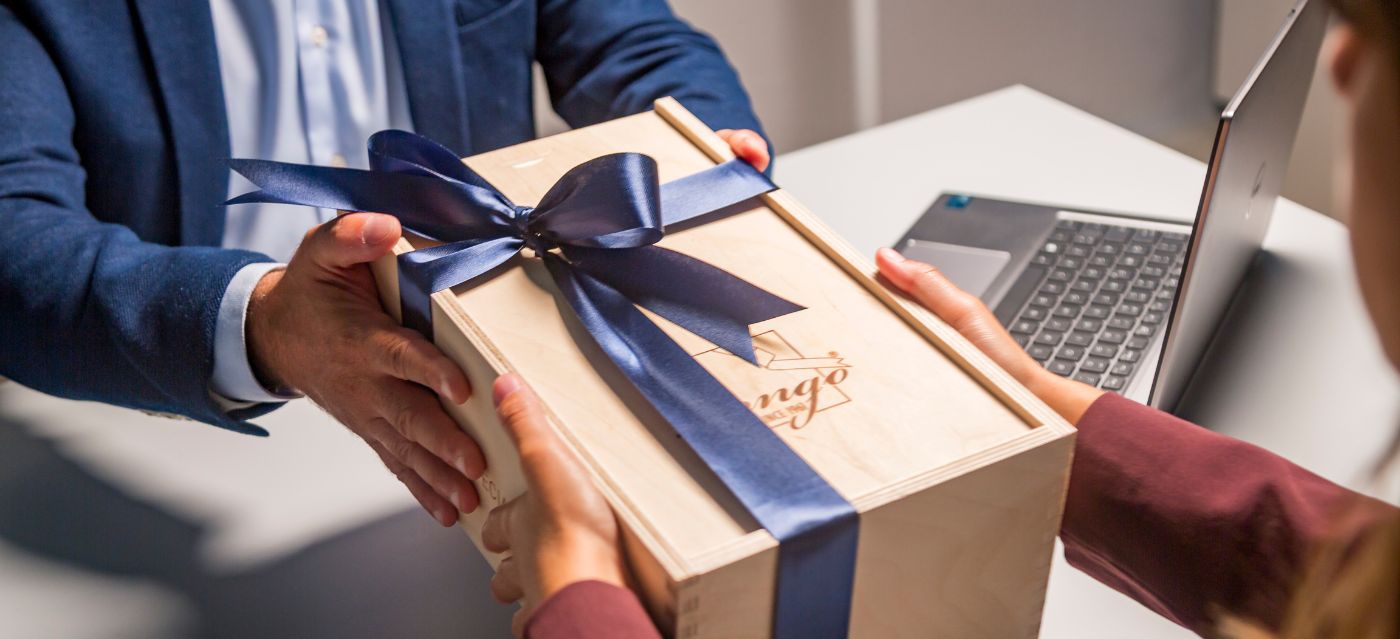
There are gestures which, over time, continue to say something about the company. The corporate gift It’s one of those: it’s often associated with the Christmas season, but in reality it tells us much more than that.
It represents a real opportunity to nurturing relationships, expressing gratitude, and valuing the bonds forged over time and leave a genuine mark. That is why, when carefully designed, it is never just a package of products: it becomes a recognisable gesture, consistent with the company’s identity and capable of conveying care.
It is from this realisation that the Longo’s Food and Wine Gift Manifesto: a reflection, set out in ten principles, on the value of gift-giving in business relationships. Not a rigid set of rules, but a guide to rediscovering the corporate gift as a genuine gesture, capable of bringing people together gratitude, quality and awareness.
Because every gift, when chosen with care, conveys a message.
Why a Manifesto?
For over sixty years, Longo has been supporting companies in the selection and construction of corporate food and wine gifts. Over this period, we have seen just how much of a difference a carefully chosen gift can make: not only to the recipient’s experience, but also to the way a company presents itself.
The Manifesto was created to bring this experience together and turn it into a guide that others can use. It is not just about objects, but about actions, values and thoughts which give meaning to every gift idea.
Because choosing a gift isn’t just about picking out something to give. It means deciding what message you want to convey, what relationship you wish to foster and what mark you want to leave.
1 – Corporate gifts as a token of appreciation
Every business is built on day-to-day relationships: with customers, staff, suppliers and partners. These are relationships forged over time, often through hard work, trust and consistency.
In this context, a gift is not merely an object. It is a way of making visible what often remains implicit: gratitude.
A food and wine gift enhances this aspect because it is linked to moments of sharing. It is not something distant: it finds its way into people’s homes, accompanies social occasions and can become part of a real-life experience. With the right amount of thought, a simple gesture can turn into a positive memory.
Case study: the power of a sense of belonging
After several years without giving Christmas gifts, a manufacturing company has decided to reintroduce this tradition with a specially curated selection of food and wine, accompanied by a card signed by the managing director.
The result was immediate: staff members saw the gift not simply as a package, but as a recognition of the work carried out during the year. Some even proudly shared the gift on their own social media channels, helping to foster a genuine sense of belonging.
The value of the gift, in this case, lay not only in the item received, but in the message that accompanied it: “Your contribution matters”.
2 – Choosing a gift with care is a sign of respect
Every business relationship involves different dynamics, roles and sensitivities. For this reason, a gift should never be a generic choice or the same for everyone.
A gift chosen with attention to detail is a tangible demonstration of thoughtfulness towards the recipient. This care is evident in the product selection, consistency in packaging, and message customisation and in the quality of the overall experience.
It’s not just a matter of deciding what to give as a present: it’s about understanding the context in which it will be received, the type of recipient, and their expectations.
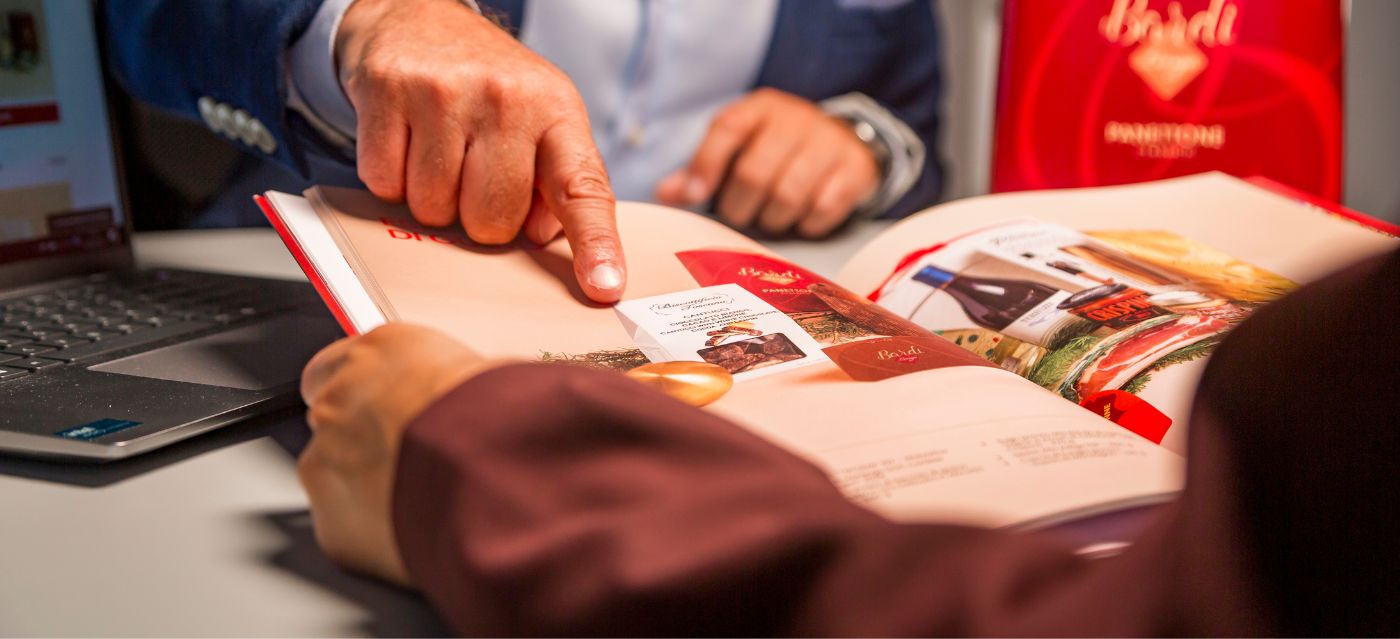
3 – A tangible gift leaves a mark
In an age dominated by digital communications, newsletters, instant messages and ever-faster content, a physical gift retains a special value.
Corporate gifts do, in fact, have a tangible impact: can be seen, touched, opened and shared.
A food and wine gift has this special quality: it brings with it aromas, flavours and rituals that linger in the memory. A bottle uncorked during a dinner, a carefully chosen jar of preserves, or an elegant gift box left on a desk all become part of a real experience.
At a time when much communication is fast-paced and digital, a physical gift becomes a tangible gesture. If chosen and presented with care, it can linger in the memory for much longer than a promotional message.
A lasting memento of a gift
A tangible gift finds its way into people’s daily lives, onto dining tables, into offices and into homes. When crafted with care, it can become a symbol, a memento or something that is positively associated with the company that gave it.
A beautifully wrapped parcel, a carefully chosen selection, a personalised message: these are all elements that help the recipient remember not only what they have received, but also those who have chosen to pay attention to him.
This is where a food and wine gift really comes into its own: it isn’t simply received, but experienced in real life.
4 – A decision that comes from the top
The gift should start with a simple question: Who do we have in mind when we choose it?
Paying close attention to the recipient means taking into account their habits, their role, the context in which they will receive the gift, and the message we wish to convey.
This does not necessarily mean creating different gifts for each person, but rather putting together a gift that is appropriate for the recipient. A gift may be more formal, more convivial, more regionally-inspired or more personal, depending on the nature of the relationship it represents.
When you truly start with the other person, a gift ceases to be a mere handover and becomes a meaningful gesture. It is not just what you give, but the thought behind it.
Case study: when the CEO signed all the tickets, one by one
A leading technology company did not want to send a generic Christmas gift to its customers. The gesture was important, but simply choosing a gift box was not enough: they needed a coherent message that would convey a sense of closeness and care.
Following discussions with Longo, the company opted for an elegant selection of food and wine, accompanied by a card personally signed by the managing director.
The result was significant: the gift was not merely seen as a package that had been received, but as a personal gesture capable of strengthening the bond with the recipient.
5 – The gift as an opportunity for communication
A gift is never neutral. Even when it is given without much said, it conveys something.
Can you talk about corporate values, style, commitment to quality, attention to detail and a desire to build relationships. The packaging, the choice of products, the card and the way the gift is delivered all help to tell a story.
In other words, every gift conveys a message. What do we want to say?
The most important question is precisely this: What message do we want to convey through this gift?
When a gift is conceived with this in mind, it ceases to be a mere token of appreciation and becomes part of corporate communication.
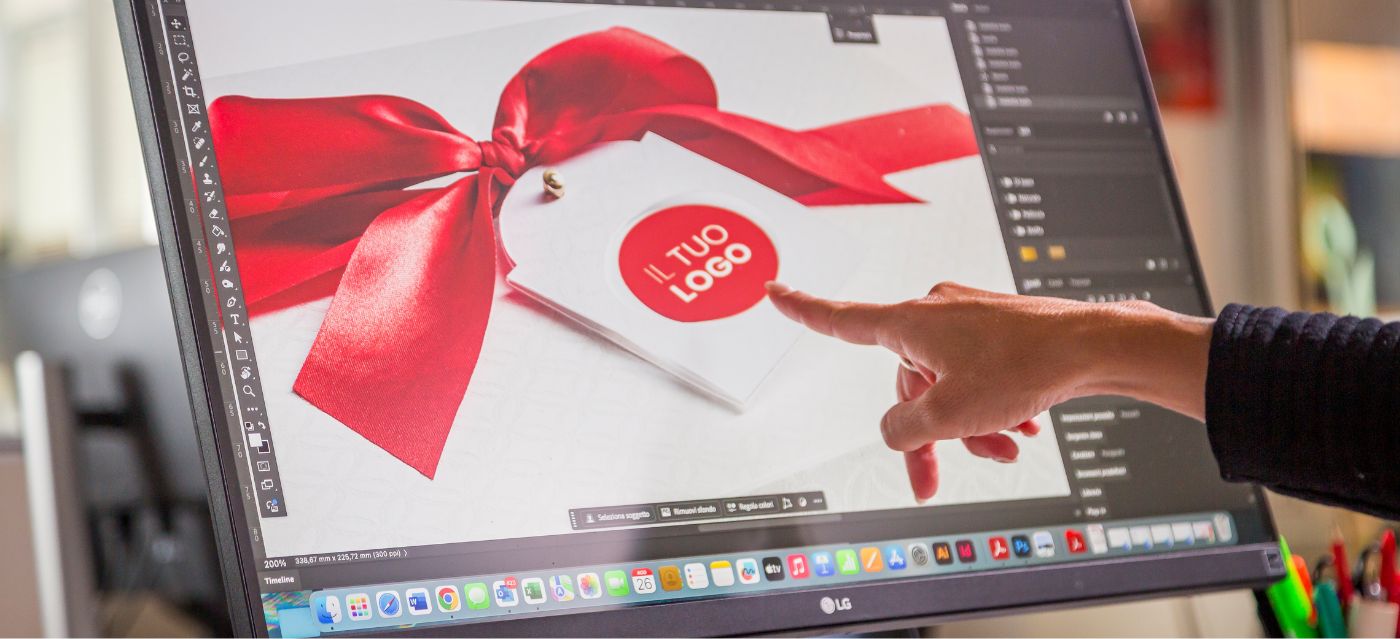
6 – Packaging is part of the message
A gift is not just about its contents. The packaging is the first thing the recipient sees.
The packaging It’s the first thing you see, It is the first gesture to be unveiled and the first sign of attention. It can convey elegance, care, sustainability, simplicity or institutional value, depending on the project and the narrative approach that accompanies it.
That is why packaging should not be regarded as a secondary consideration, but as a fundamental part of the experience.
Case study: when a box becomes a piece of furniture
An international fashion company has teamed up with Longo to create sophisticated packaging, designed to accompany a selection of food and wine intended for customers and partners in various countries.
After the festive season, many recipients kept the packaging and used it in their daily lives. The gift did not come to an end the moment it was opened, but continued to live on as an elegant and recognisable object.
In this case, the packaging did not merely serve as a container: it became part of the experience of giving.
7 – Quality, not quantity
When choosing a corporate gift It is not the quantity that makes the difference, but quality.
A very extensive range, but one lacking a unifying theme, can be distracting. A more streamlined selection, comprising carefully chosen products, can, by contrast, be perceived as more elegant, more coherent and more memorable.
A meaningful gift isn’t the one that contains the most. It’s the one that tells the best story.
A signature wine, an artisan speciality, a regional product or a high-quality dessert can be more compelling than a plentiful but somewhat disjointed dish.
8 – Solidarity and gratitude: two distinct moments
Solidarity is an important value in the life of businesses. Even a corporate gift can provide an opportunity to support a social, cultural or local initiative, provided that this decision is communicated thoughtfully and consistently.
However, it is important not to confuse the two.
Corporate gifts are intended to express gratitude towards customers, staff or partners. Charity initiatives, on the other hand, demonstrate a company’s social responsibility towards the community.
When these two dimensions coexist, they must do so in a balanced way, so as not to turn the gift into a self-referential form of communication. A charitable gift works when it keeps the recipient at the heart of the matter and, at the same time, provides a straightforward account of the project being supported.
In this way, the gift does not lose its personal value and becomes part of a broader vision.
9 – Skipping a present is a false economy
Opting out of corporate gifts may seem like a sensible choice: it reduces a cost item, simplifies organisation and makes it easier to manage what is often a complex period. But it does not always result in real savings.
A well-made gift is a relational investment. It strengthens relationships, creates lasting memories, fosters trust and offers an opportunity for connection that is difficult to replace with standard communication. Of course, choosing not to give a gift is a perfectly valid option. But it should be considered carefully, because even the absence of such a gesture conveys a message.
The impact of corporate gifts
According to internal research by Longo, 57% of recipients still remember the company that gave them a gift, even two years later. 76% of the managers interviewed consider corporate gifts to be an effective tool for strengthening professional relationships.
These figures confirm a fact that is often underestimated: a gift does not create value only at the moment it is given. If chosen with care, it can continue to generate memory, trust and relationships over time.

10 – Every gift says something about the company
A corporate gift is a form of silent communication.
Tell us attention to detail, quality, style, consistency and respect that a company chooses to include in its reports.
A thoughtfully chosen and cohesive gift becomes a hallmark, capable of reflecting the company’s values without the need for too many words.
For this reason, it should not be chosen solely on the basis of budget or product availability, but on the basis of the type of message the company wishes to convey.
The current value of food and wine gifts
The significance of corporate gifts has changed over time, but today they have taken on a new importance. After years in which many professional relationships have become more fleeting, digital and distant, people are seeking genuine gestures, practical tools and more thoughtful relationships.
These days, food and wine gifts meet a simple and universal need: share.
It is made up of real products, flavours, traditions, regions and experiences to be savoured. It speaks of quality, care and a sense of togetherness, and allows businesses to convey their commitment without the need for grand statements.
The project that consciously looks to the future is the Longo’s Food and Wine Gift Manifesto: a reflection designed to restore the corporate gift to its truest meaning. Not a seasonal obligation, nor simply a gift to be chosen in a hurry, but a gesture that reflects the company’s values, strengthens relationships and leaves a positive impression.
For over sixty years, Longo has been supporting companies in the selection and construction of thoughtfully designed, well-balanced and carefully curated food and wine gifts. Every project begins by listening: objectives, target audience, budget, corporate identity, timelines and operational requirements.
Because every gift says something about the company giving it.
And when it is chosen with care, it can continue to do so even after it has been received.